Warmer Rooms, Lower Bills, Better Looking Walls
Thousands of homes around Hull were built with solid walls or narrow cavities that leak heat all winter. Internal insulation eats into your rooms. External wall insulation solves the problem from the outside instead.
Insulation boards are mechanically fixed and bonded to your external walls, then covered with a reinforced basecoat and a coloured silicone or thin coat render. The result looks like any smart, freshly rendered home, but the walls behind it hold their heat.
- Noticeably warmer rooms and fewer cold spots on external walls.
- Lower heating bills, because your boiler stops heating the street.
- Reduced condensation and mould risk as internal wall surfaces stay warmer.
- A complete exterior facelift in your choice of colour and texture.
- No lost floor space, unlike internal insulation.
How An Insulated Render Job Runs
- Survey and quote. Neil assesses your walls, measures up and specifies the right board thickness and system for your property.
- Preparation. Rainwater goods, fixtures and sills are dealt with, and the walls prepared so boards sit flat and true.
- Insulation boards. Boards are bonded and mechanically fixed, with edges and openings detailed properly, which is where cheap jobs fail.
- Reinforced basecoat. Mesh is embedded in a levelling basecoat across the whole elevation for strength and crack resistance.
- Render finish. A through-coloured silicone finish is applied, with beads and reveals left crisp and clean.
Insulated Rendering FAQs
Is external wall insulation worth it?
For solid wall properties it is one of the most effective energy upgrades available, and unlike most improvements it also renews the whole look of your home at the same time. Savings depend on your property, but the difference in comfort is usually felt in the first cold week.
Will insulated render make my walls look thick or odd?
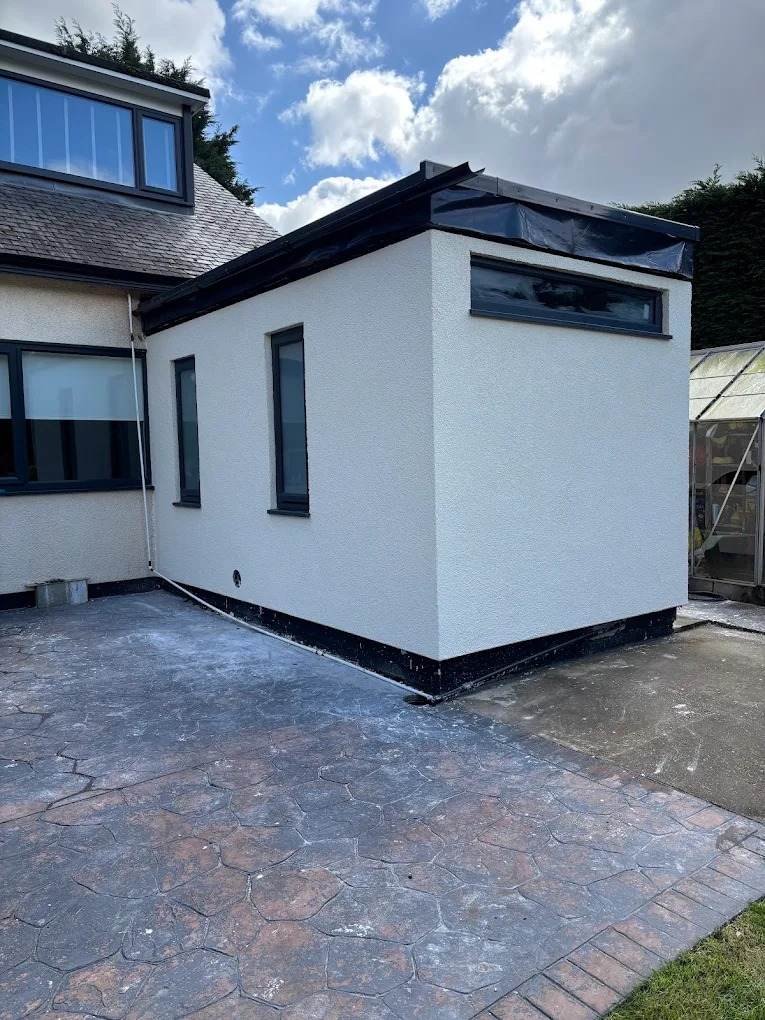
Window reveals, sills and edges are detailed as part of the system, so the finished job looks intentional and clean. The photos on this page are real examples of how neat the finished result is.
Can insulated render be applied to an extension only?
Yes. It is common to insulate and render a new or existing extension so it outperforms the rest of the house, or to bring an older extension up to standard while matching the finish to the main building.
How long does external wall insulation last?
A properly installed and maintained EWI system is a long-term improvement, typically lasting decades. The silicone finish resists dirt and cracking and does not need repainting.
How much does insulated rendering cost compared to standard render?
Insulated render costs more than a standard re-render, since insulation boards, fixings and a reinforced basecoat are added to the system before the finish coat goes on. The trade-off is a genuine improvement in how warm the property feels, not just a refreshed exterior, which is why it's often considered alongside other energy upgrades rather than compared directly to a straightforward render.
Do I need planning permission for external wall insulation?
Most homes fall under permitted development for external wall insulation, though this can vary for listed buildings, conservation areas or flats. It's worth checking with the local council if the property falls into any of those categories, but for a typical semi or detached home it's rarely an issue.
Is insulated rendering a DIY job?
Getting board thickness, fixing patterns and detailing around windows and reveals right is where EWI systems succeed or fail, and manufacturer warranties generally require the system to be installed by a competent, often accredited installer. This is one of the less realistic DIY projects in rendering, given how much the long-term performance depends on the installation itself.