
Home › Services › Lime Rendering

Period & Older Properties · Breathable Finishes

Lime Rendering in Hull & East Yorkshire

Older homes were built to breathe. Lime render lets moisture escape the way the original builders intended, protecting solid walls in period properties across Hull, Cottingham and Beverley from trapped damp and decay.

The Right Material For Older Walls

Modern cement render is too hard and too impermeable for many pre-1930s solid wall homes. It traps moisture in the wall, which shows up later as damp patches inside, spalling brickwork and render that cracks and blows off in sheets.

Lime render works differently. It is softer than the masonry behind it, flexes with the seasonal movement of an old building and lets moisture evaporate out through the surface. That is why conservation officers specify it, and why it is the honest recommendation for many older properties even when cement would be quicker.

  • Lime rendering for external solid walls, applied in properly cured coats.
  • Lime plastering for internal walls in period homes.
  • Repairs and patching to existing lime render, matched in texture and finish.
  • Cement removal and re-rendering in lime where the wrong material has caused damp problems.

How A Lime Render Job Runs

  1. Assessment. Neil inspects the walls, checks for trapped moisture and previous repairs, and confirms lime is the right specification.
  2. Removal and preparation. Failed or inappropriate render is carefully removed and joints raked out ready for keying.
  3. Coats applied. Lime render is built up in coats, with proper curing time between each rather than rushing the job.
  4. Finish. The final coat is finished to suit the property, from a smooth float to a traditional textured face.
  5. Aftercare advice. Guidance on breathable paints and finishes so the new render can do its job for decades.

Lime Rendering FAQs

How do I know if my house needs lime render?
As a rule of thumb, solid wall properties built before the 1930s were built with lime and perform best with it. Signs of the wrong material include persistent internal damp, cracked or hollow-sounding cement render and crumbling brick faces. Neil can confirm on inspection.
Is lime render more expensive than cement?
It usually costs more because the materials are pricier and each coat needs proper curing time. On the right property it is cheaper in the long run, because it prevents the damp and decay that failed cement render causes.
Can lime render be painted?
Yes, with breathable paints such as limewash or mineral-based masonry paints. Standard plastic masonry paints seal the surface and undo the benefit, so the right paint choice matters.
Do you work on listed buildings?
Neil works on period and character properties across the area. If your building is listed, consent requirements are down to you and your council, but the workmanship and materials will stand up to a conservation officer's scrutiny.
How long does lime render take to cure?
Lime render cures slowly compared to cement, typically needing a week or more between coats depending on the weather, and several weeks before it's fully hardened. This is a genuine feature of the material rather than a delay to be rushed, since curing too fast is what causes cracking and weak, powdery render.
Is lime rendering a DIY job?
Lime is far less forgiving than modern cement-based renders, with application technique, coat thickness and curing time all affecting the final strength and breathability. Getting it wrong on a period property can mean redoing the work entirely, which is why lime rendering is one of the jobs most worth leaving to someone experienced with the material.
How do I choose the right lime rendering specialist?
Ask about experience specifically with lime, not just general rendering, since the two materials behave very differently and a renderer used to cement can get the technique wrong. Evidence of work on similar period properties, and a willingness to explain why lime suits your walls rather than pushing a faster cement job, are both good signs.
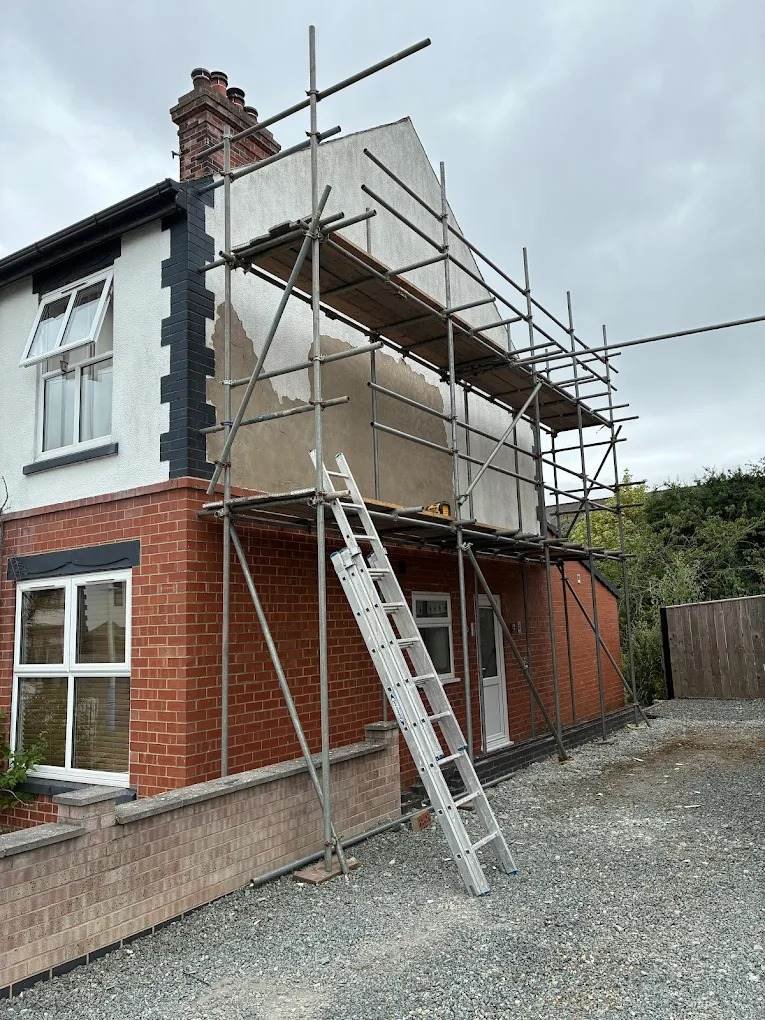
Lime render coats being built up on the gable of a period semi in Hull
What to Expect

Before Any of That Starts

An honest assessment of whether lime genuinely suits the property comes before any quote, since cement is not the right recommendation for every older wall. Coats are built up with proper curing time between each rather than rushed to finish sooner. Guidance on breathable paints and finishes is given at the end, so the new render can actually do its job for decades.

Why Neil Spence

Why Choose Neil for Lime Rendering

Genuine Lime Experience

Lime behaves differently to cement at every stage, and it's applied and cured with that difference respected, not treated as a slower version of modern render.

Honest About What Your Walls Need

Cement is never recommended just because it's quicker, when lime is genuinely the right specification for the property.

Built to Conservation Standard

Materials and workmanship stand up to scrutiny on listed and period buildings, not just on unlisted homes.

Own An Older Property?

Get honest advice on whether lime is the right specification for your walls, before anyone quotes you for cement.